
The Peculiar Challenge
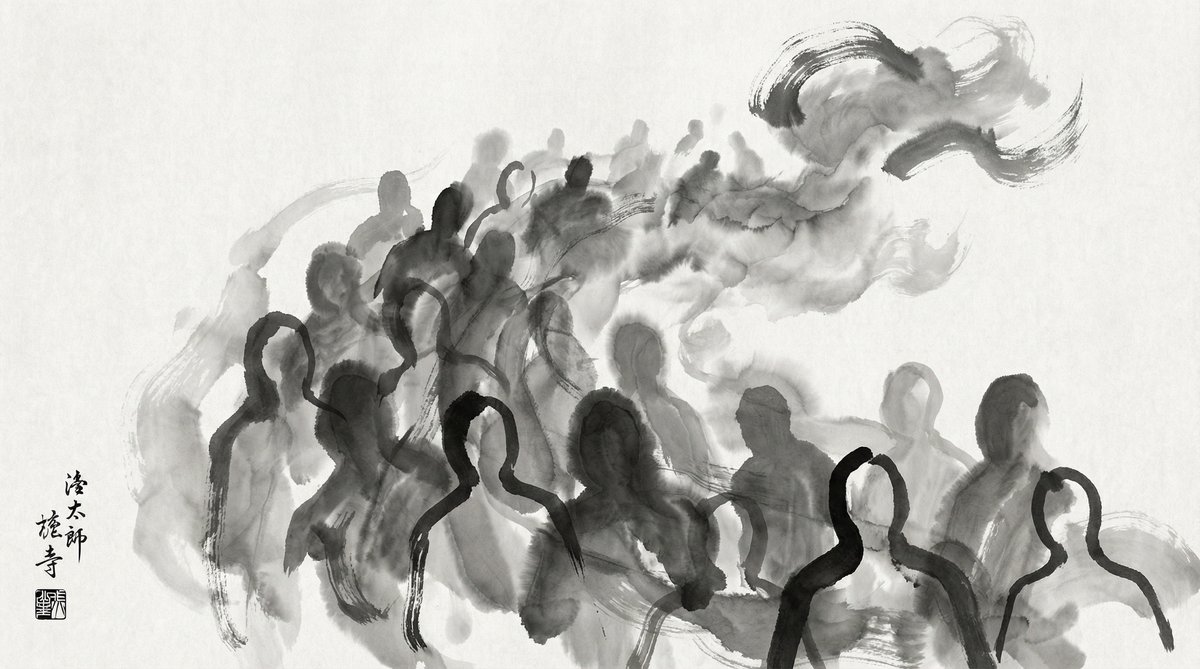
You know, there's a very peculiar thing that happens to people who have undergone what we might call a spiritual awakening. They find that crowds, gatherings of people, what we would ordinarily think of as perfectly normal social situations, become extraordinarily difficult to navigate.
And I don't mean difficult in the sense of social anxiety or shyness, though it might appear that way from the outside. I mean something far more subtle and far more profound.
When you wake up, when you see through the game that most people are playing, when you recognize that the emperor has no clothes, you begin to experience crowds in an entirely different way. It's rather like being the only sober person at a party where everyone else is intoxicated. You can see what's happening with a clarity that's almost painful, while everyone around you is completely absorbed in the drama, completely identified with the performance.
The Noise of a Thousand Egos
Let me describe what this actually feels like, because it's quite remarkable. When a spiritually awake person enters a crowd, the first thing they notice is the noise. And I don't mean just the physical noise, though that's certainly part of it. I mean the psychological noise, the energetic noise, the noise of a thousand different egos, all clamoring for attention, all trying to assert themselves, all desperately attempting to be seen, to be heard, to matter.
It's like walking into a room full of radios, each tuned to a different station, all playing at maximum volume. And the awake person can hear all of it simultaneously. They can feel the anxiety radiating from one corner, the anger pulsing from another, the desperate need for validation coming from someone nearby, the performance of superiority from someone else.
It's overwhelming in a way that's very difficult to describe to someone who hasn't experienced it.

"It's rather like being the only sober person at a party where everyone else is intoxicated."
Extraordinary Sensitivity
You see, most people are so identified with their own internal noise that they don't notice the noise of others. They're so busy with their own thoughts, their own concerns, their own little drama, that they're essentially insulated from the collective cacophony.
But the person who has awakened has, in a sense, dropped their own noise, or at least learned not to identify with it. And so they become extraordinarily sensitive to the noise of others. It's rather like what happens when you stop talking yourself. Suddenly, you can hear what everyone else is saying.
And when you're in a crowd, what you hear is not particularly pleasant. You hear fear masquerading as confidence. You hear emptiness pretending to be fullness. You hear the desperate hunger for meaning, for connection, for something real, all covered over with layers upon layers of social performance.
Compassion Without Judgment
Now, let me be clear about something. The awakened person doesn't judge this. They don't look down on people in crowds and think themselves superior. That would be just another form of ego, another form of separation.
What they feel is more like compassion mixed with a kind of existential exhaustion. They can see the suffering so clearly, can see how everyone is trapped in their own little prison of self-concern. And there's a deep wish that people could see what they're doing to themselves.
But there's also the recognition that you can't force anyone to wake up, can't rescue anyone from their own illusions.
"You hear fear masquerading as confidence. You hear emptiness pretending to be fullness."
The Battle for Energy
Another thing that happens in crowds is what I might call energetic invasion. You see, most people have very poor energetic boundaries. They're constantly leaking energy and simultaneously trying to take energy from others. This is what most social interaction actually is, though people don't realize it. It's an unconscious exchange, or more accurately, a battle for energy.
People try to make themselves feel more substantial, more real, more alive by drawing attention, by dominating conversations, by making others laugh, by impressing others with their accomplishments.
The awakened person can feel all of this happening, can sense the constant pull and push of energy, the grasping and the defending, the inflating and the deflating. And because they're not playing this game anymore, because they're not trying to get energy from others, they often become a target.
A Source of Water in a Desert
People unconsciously sense that here is someone who has energy to spare, someone who isn't defending themselves in the usual way, and they gravitate toward them, trying to draw from that well.
This is exhausting. Imagine being a source of water in a desert. Everyone who's thirsty will come to you, will want something from you, and you cannot serve everyone without depleting yourself.
And so the awakened person often needs to withdraw, needs to protect their energy, not out of selfishness, but out of simple self-preservation.
The Matter of Authenticity
There's also the matter of authenticity, or rather, the lack of it. In crowds, people are almost never authentic. They're playing roles, wearing masks, performing versions of themselves that they think will be acceptable, impressive, worthy of love or respect.
And this performance is so automatic, so habitual, that most people don't even know they're doing it. But the awakened person can see it clearly, can see the gap between what people are presenting and what they actually are.
And this creates a very strange situation, because the awakened person, having dropped most of their own masks, having learned to simply be what they are, without pretense, now stands out. They seem unusual, perhaps too direct, perhaps too quiet, perhaps too unwilling to engage in the usual social games.
Becoming a Mirror
And this makes others uncomfortable. People sense that this person is not playing by the rules, is not participating in the collective performance. And this is threatening to them, because it reminds them, unconsciously, of their own inauthenticity.
So the awakened person often finds themselves isolated within the crowd, present but not truly participating, observing but not deeply engaging. They become like a mirror, and people don't particularly enjoy looking into mirrors that reflect their true face, rather than the image they've constructed.
The Collective Consciousness
There's another aspect of this that's worth exploring. In crowds, there's a kind of collective consciousness, a group mind that forms. People start to think and feel in unison, influenced by the mood of the group, the expectations of the gathering, the unspoken rules of the situation.
This is why crowds can become mobs so easily. The individual consciousness gets submerged in the collective, and people do things in groups that they would never do alone.
But the awakened person doesn't merge with the collective in this way. They maintain their individual awareness even within the group. They can observe the formation of the group mind without being absorbed by it.
And this, again, creates a sense of separation, of being alone even in the midst of many people. They're like someone watching a film while everyone else is inside the film, completely identified with the story.
The Path of Stillness
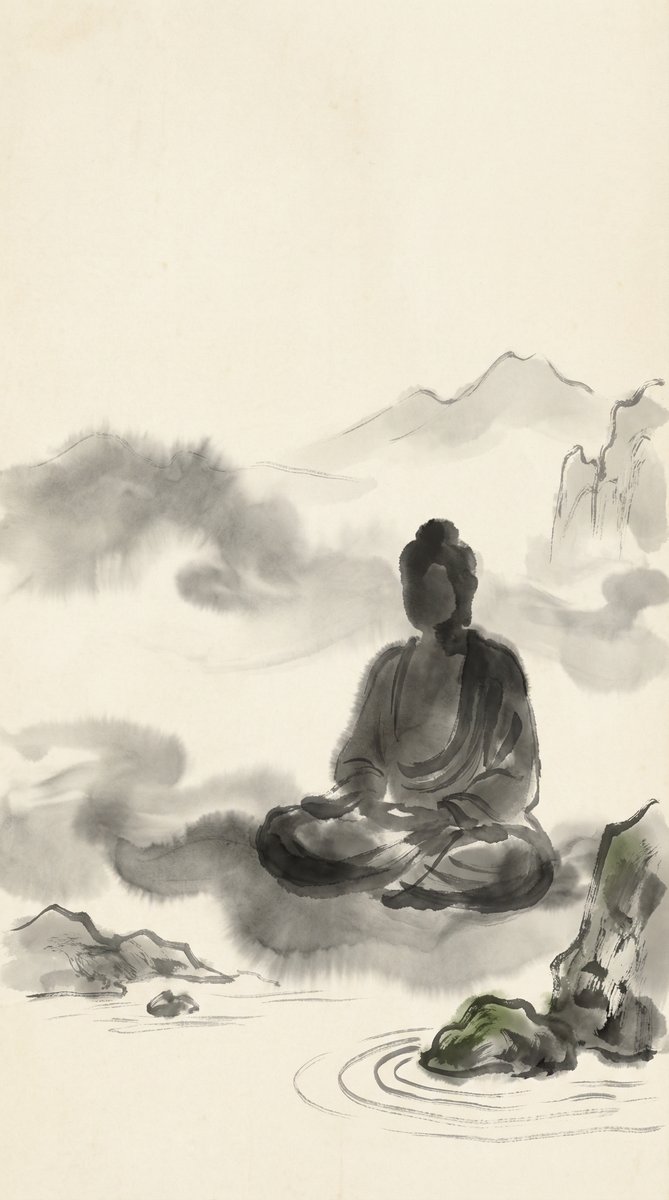
In the midst of collective noise, the awakened one finds refuge in stillness. Not as an escape, but as a return to the source of true presence.
The Collective Mind
When individual consciousness merges with the group, the awakened observer remains apart—watching the film while others live inside it.